You can walk a buffet line, spot the fruit flies, and know exactly where the pressure is coming from, a sticky floor mat near the prep sink, an open waste lid, a door that stays propped during service, or a patio setup that looked fine at setup and went sideways after sunset. In homes, it's the same pattern in smaller form, a kitchen trash can, pet food, a damp basement corner, or a garage door gap that keeps inviting pests back in.
That's why sustainable pest control matters most in restaurants, hotels, caterers' setups, and busy homes. The core work isn't chasing pests with a spray bottle, it's building a system that keeps them from thriving in the first place, then using targeted intervention only when the monitoring data says you need it.
Why Urban Spaces Need Sustainable Pest Control
A catered rooftop wedding can look perfect right up until flies start landing on the dessert table. In a hotel or restaurant, that moment is rarely about one bad product choice, it's usually a collection of small misses, a door left open too long, waste staging too close to guest areas, or staff who never got trained on what to watch for during service.
Urban hospitality spaces have been left with too much generic advice and not enough implementation guidance. California's 2024 Sustainable Pest Management roadmap says research funding is still concentrated in production agriculture, while investment in urban pest challenges and outreach is relatively poor, and it calls for more urban data, research, and outreach. That gap shows up in real life, because restaurants, hotels, food-service venues, and dense housing need advice that works under service pressure, not just in a field trial.
Why generic IPM advice falls short
The usual public messaging stops at “use IPM,” but that doesn't tell a banquet manager how to handle flies over a buffet, or a homeowner how to keep ants out of a patio dinner. The same roadmap notes that the top unmet needs in urban sustainable pest management are public awareness, practitioner training, environmental effects, and training in customer communications. That's the missing layer in most content, especially for hospitality teams who have to protect the guest experience while keeping control methods discreet.
A restaurant doesn't need theory alone. It needs a playbook that covers staff behavior, building maintenance, cleaning, and fast decision-making when a pest shows up near food. That's also why the chemical-free myth misses the point, because the primary goal is control that's effective, low-disruption, and transparent enough to fit a service environment.
The best urban programs are built for the people who have to use them under pressure, not for readers who only want a neat slogan.
For hospitality operators and homeowners, the mandate is clear. Sustainable pest control has to include public awareness, practitioner training, and customer communication, or it stays too abstract to protect food, guests, and reputations.
Assess Your Property for Pest Risks
Start with the property, not the product. Walk the space the same way a pest would, from the edges inward, and look for the places where food, moisture, and access come together. A short, disciplined inspection catches more problems than a shelf full of sprays.
Build a fast audit that staff will actually use
Begin at the building envelope. Check door sweeps, loading doors, utility penetrations, cracked seals, torn screens, and gaps around vents. In kitchens and homes, move to moisture hotspots next, under sinks, behind refrigerators, around dish areas, near floor drains, and any corner where air movement is poor and standing water or condensation appears.
Then look for food debris zones. That means the under-bar area, the back of dry storage, trash staging, grease-handling areas, and outdoor spots where guests leave crumbs after events. For homes, it's the same logic around pet bowls, compost bins, pantries, and patios.
Photograph what you find before you fix anything. A simple phone album by zone makes it easier to compare conditions over time, and it helps line cooks, maintenance staff, or homeowners see patterns they'd miss in the moment. If you want a basic home-focused companion view, this residential pest management guide can help you think through the same risks in a domestic setting.
Create a baseline before you buy controls
Place sticky traps or other passive monitors in the highest-risk spots, especially near doors, storage edges, and moisture-prone areas. You're not trying to solve the problem on day one, you're trying to learn where activity concentrates so your next move is based on evidence.
Use a simple audit note for each zone, one line for access, one for moisture, one for food residue, and one for pest signs. If a prep cook or housekeeper sees droppings, gnaw marks, or repeated fly activity, that observation belongs in the log the same day. The point is to turn scattered sightings into a usable map, not a pile of anecdotes.
If you can't describe the hot spots, you don't yet have a control plan, you have a guess.
The output should be a prioritized risk map. Once you know which doors, drains, bins, and corners are driving pressure, the rest of the program gets much easier to manage.
Core IPM Principles for Food Spaces
Integrated Pest Management, or IPM, is a management system, not a single spray, trap, or gadget. It combines monitoring, thresholds, biological controls, and physical barriers so pesticides are used only when they are justified. Sustainability research treats it as a system-level shift, not a product swap.
The policy roots matter here. IPM became a formal U.S. sustainability milestone in 1993, when the Clinton Administration, with USDA, EPA, and FDA testimony, set a national goal to implement IPM on 75% of U.S. crop acreage by 2000. Modern crop-pest datasets show how the mindset has spread, with surveys reporting 75% or greater acreage use for 11 pest management practices in vegetable crops in 2022 and 7 practices in fruit and nut crops in 2021 (IPM milestone and adoption data). Scouting for insects, mites, weeds, and diseases is the most widely used practice across crops in that same evidence base.
How the system works
IPM works in sequence. First, you inspect. Then you prevent. Then you intervene only if the threshold shows the issue is real, not imagined. Finally, you evaluate whether the action changed the trend.
That sequence matters in restaurants and homes because a one-off fix often feels productive while the problem keeps simmering. A door sweep, a sanitation change, a fan, or a low-toxicity treatment can all help, but each one works best inside a routine of observation and follow-through. In a buffet line, that means you are not chasing every fly with a spray can, you are checking where they enter, what attracts them, and whether the controls hold through a busy service. In a kitchen or apartment, the same logic keeps the response measured instead of reactive.

Why the “chemical-free” framing is incomplete
The strongest IPM programs do not pretend chemistry has no place. They treat pesticides as a last-resort tool, used with restraint and only after monitoring shows they are justified. That is the operational difference between a slogan and a working food-space program.
For a quick conceptual refresher on the framework itself, this what-is-integrated-pest-management guide fits the practical lens here. The takeaway is simple, IPM is a decision system. If the team cannot inspect, prevent, act, and evaluate, then it is not really doing IPM at all. For a restaurant-side example of how sanitation decisions support that system, see BacteriaFAQ.com for restaurant hygiene.
Sanitation and Physical Exclusion Methods
Physical exclusion is the cheapest control you'll ever buy after the fact, because you pay for it once and keep getting the benefit. Seal the building first, then clean harder, then worry about intervention tools. That order matters.
Seal the structure and dry the interior
The U.S. Building America Solution Center recommends sealing joints and openings with flashing, gaskets, metal mesh, and sealants; installing durable metal screening over vents; using insect screens and reinforced screen doors; and keeping interiors dry with ventilation and dehumidifiers where needed (Building America pest control guidance). It also points to pest-resistant materials such as brick, concrete, stone, fiber cement, aluminum, steel, rigid plastics, and borate-treated lumber. In practice, that means you're reducing the places pests can enter, hide, and breed.
In restaurants, I focus first on loading doors, pipe penetrations, wall-floor joints, and the backs of dish and prep areas. In homes, it's usually garage gaps, crawl spaces, under-sink cabinetry, and patio transitions. These are boring fixes, which is exactly why they work.
Dry rooms, sealed gaps, and closed access points do more for long-term control than most people expect.
Sanitation supports the building work
Sanitation isn't just “clean better.” It means removing the residues that keep pests coming back, especially around drains, waste storage, bar edges, and floor corners where grease and sugars collect. In restaurants, drain cleaning is one of those jobs that looks invisible when it's done right and obvious when it's neglected, which is why BacteriaFAQ.com for restaurant hygiene is useful context for operators who need to tighten up the behind-the-scenes work.
The practical rule is straightforward. Fix the opening, remove the food source, and keep the area dry. If you do only one of those, you're making life easier for the pest, not harder.
Monitoring and Action Thresholds
Weekly scouting turns pest control into a measurable habit instead of a panic response. SARE says to check crops for pests at least once a week, inspect the upper and undersides of leaves, stems, and soil under the plant, and record observations in a field notebook. It also says weekly surveys should be used to determine whether pest numbers warrant management (SARE sustainable pest management guidance).
Use the same rhythm in restaurants and homes
In hospitality, the same logic applies to sticky traps, door zones, storage areas, and food contact edges. Walk the space on a fixed day, check what the monitors caught, note where you saw live activity, and compare it with the previous week. That's how you separate a random sighting from a trend.
A useful log has five fields, date, location, pest type, count or severity, and action taken. Keep the language plain enough that a line cook, server, housekeeper, or homeowner can fill it out without guessing. If the team sees a fly near the buffet line every Friday night, you want that pattern written down, not remembered vaguely.
Thresholds should trigger action, not arguments
The threshold can be simple and local. If one monitor shows repeated fly activity near guest food, or if roach signs appear in storage, the team moves to intervention. The purpose isn't perfection, it's knowing when the level of activity has crossed from watchful to operational.
If the log doesn't change decisions, the log is just paper.
A small, consistent scouting routine also keeps the team honest about what's improving. When numbers fall after sealing, sanitation, or trap placement, you can see it. When they don't, you know it's time to adjust the plan instead of repeating the same move.

Low-Toxicity Controls and Discreet Fly Fans
A buffet line with flies circling the desserts is not the place for a heavy-handed response. In a restaurant dining room, café patio, hotel breakfast area, or catered reception, the job is to cut pest pressure without turning the space into something that feels like a cleanup zone.
Start with visible but quiet mechanical control
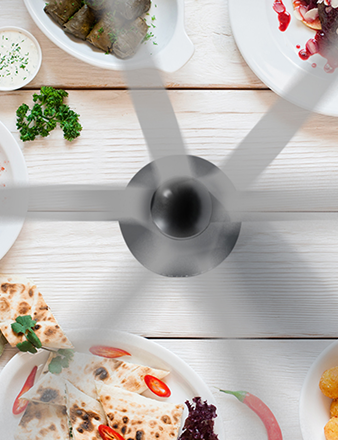
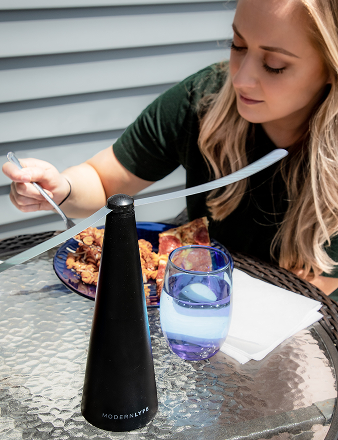
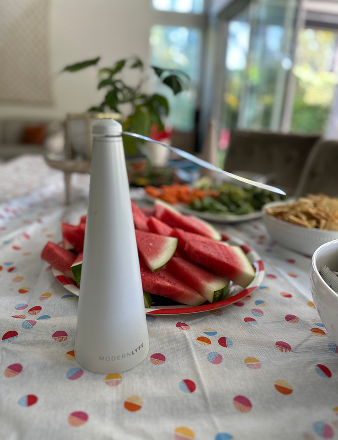
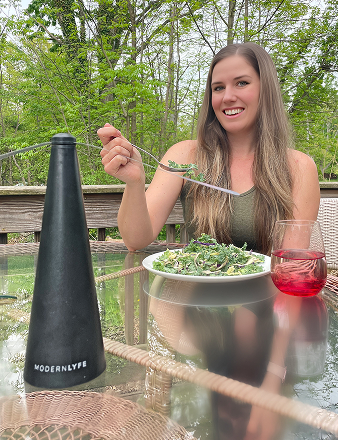
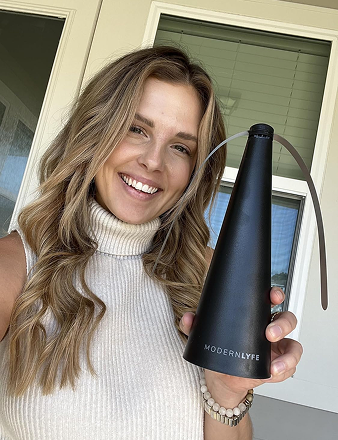
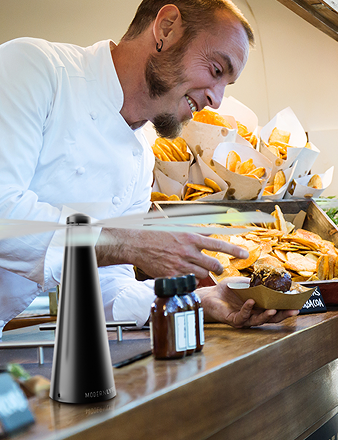
A practical hospitality option is a battery-operated, quiet fly fan on buffet lines, dessert tables, bar service points, or outdoor setups where flies hover near food. Modern Lyfe makes this kind of discreet tabletop solution, and it fits the spaces where appearance matters as much as hygiene. It does not solve every fly problem, but it gives you a physical barrier that guests can see without drawing attention to itself.
The fan works best when sanitation, exclusion, and monitoring are already doing their part. Put it in a dirty, open, wet zone and it will disappoint you. Use it to support a clean, sealed, monitored service area, and it becomes a useful layer instead of a gimmick.
Use targeted inputs only when the data says so
A review on sustainable pest control reports that classical biological control can achieve long-term pest suppression with 50–90% success rates, augmentation releases can reduce pest populations by 50–80% in greenhouse crops, and conservation tactics can increase natural enemy populations by 30–60% (biological control review). The same literature also warns that results depend on conditions, so repeated releases or other supporting tactics are often needed when natural enemies do not establish well enough.
That is the part public articles often skip. Sustainable pest control is not always chemical-free, a point that challenges a lot of myths about pest management, and a practical chemical-free pest control overview makes that distinction clear. A 2024 review notes that integrated pest management depends on surveillance, risk assessment, monitoring, and careful pesticide use rather than one-off natural fixes, and older urban pest literature shows insecticide resistance can undermine control when broad-spectrum products are overused (IPM and resistance review). The better answer is usually a targeted, last-resort intervention paired with monitoring and resistance management.
Low-toxicity does not mean no strategy. It means you use the least disruptive tool that still solves the actual problem.
The other reason this layered approach matters is cost and contamination. A recent review found that reducing chemical inputs can save $20–50 per hectare in pesticide costs and cut soil and water contamination by 30–70%, while biological control can reduce pest-control costs by 40–60% (sustainable pest control review). Hospitality budgets work differently, but the practical lesson carries over, broad-spectrum overuse is expensive, and targeted control is usually cleaner operationally.
Train Staff and Measure Long-Term Success
A control program falls apart fast if only one manager understands it. Housekeepers, servers, cooks, banquet captains, maintenance staff, and homeowners all need to know what pests look like, where to report them, and what details matter. The strongest urban programs close the gap between sightings and action.
Train people to notice, report, and communicate
The urban roadmap's biggest unmet needs, public awareness, practitioner training, and training in customer communications, show up here in day-to-day work. Staff should know the signs, droppings, chewed packaging, live insects, smear marks, or repeated fly activity, and they should know how to log the time, location, and a photo when possible.
Customer communication matters too. In hospitality, a manager may need to explain that the property uses monitoring, exclusion, and targeted control, not blanket spraying. That kind of message builds trust because it sounds like an operation that knows what it's doing.
Review trends, not just incidents
A monthly or quarterly review should ask one question, are pest levels staying below threshold? That's a more realistic success metric than pretending zero pests is always possible in food service or residential outdoor use. The goal is control, not fantasy.
A simple scorecard can track three things, monitor counts, repeated hot spots, and what action was taken. If the same corner keeps triggering activity, training and maintenance need to change, not just the trap location. If the counts fall after staff tighten waste handling or door discipline, that's proof the system is working.

MODERN LYFE offers discreet fly fans that fit buffet lines, outdoor receptions, patios, and home gatherings without turning the space into a pest-control scene. If you're building a practical sustainable pest control setup around monitoring, exclusion, and staff training, visit MODERN LYFE to see how a quiet mechanical barrier can support the rest of your program.