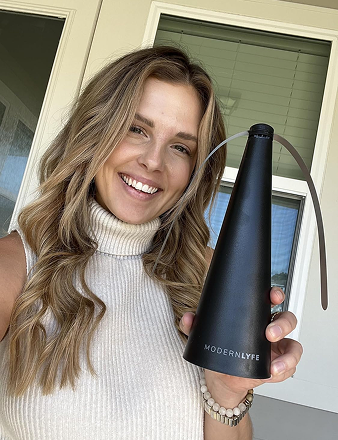
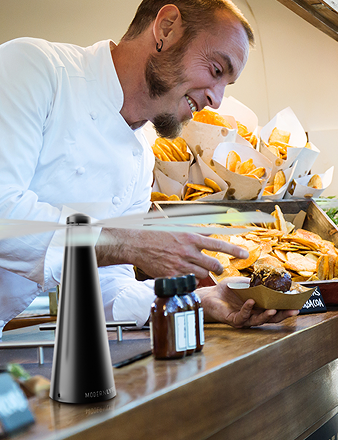
An outdoor dinner can look perfect on paper and still feel off at the table. The linens are pressed, the candles are lit, the menu is strong, and then guests start making the same small motion over and over. They wave a hand near their plate. Staff notice, but they're busy. Someone grabs a spray bottle. The problem gets “handled,” but the room changes. The mood drops, and the service feels reactive.
That kind of moment is why understanding customer needs matters so much in hospitality. Guests rarely walk up and say, “I need discreet insect control that protects the food, preserves conversation, and fits the aesthetic of this tablescape.” They just show you the problem through behavior. A 2021 McKinsey finding summarized by Drive Research reported that 80% of customers are willing to pay 15–20% more for products that address their specific needs, with food hygiene and guest comfort among the top priorities. In hospitality, that gap between what people say and what they show is where the best improvements are found.
Introduction to Understanding Customer Needs
A restaurant manager once told me the hardest service problems are the ones nobody formally reports. Guests don't always complain. They adjust. They lean away from a draft, stop using a self-serve station, or avoid lingering over dessert on the patio. Event clients do the same. They may praise the setup afterward while deciding they won't repeat that exact format again.
That's the trap. Teams assume no complaint means no problem.
Understanding customer needs starts with accepting that customer behavior is data. In an outdoor reception, repeated swatting, staff using improvised fixes, and guests leaving food uncovered for the shortest time possible all point to the same need. People want comfort, hygiene, and a smooth experience without ugly or disruptive interventions.
Hospitality operators who learn to read those signals make better decisions about layout, service flow, and equipment. They also stop wasting money on fixes that solve the symptom but damage the experience.
Practical rule: If guests or staff have created a workaround, a customer need already exists.
Understanding Key Concepts
Most hospitality teams are good at hearing requests. Fewer are good at spotting the need behind the request. That distinction matters because guests often describe the solution they can imagine, not the result they require.
A simple way to think about it is an iceberg. The visible tip is what customers say. The larger mass below the waterline is what they expect, assume, or can't easily put into words.

Stated needs
These are the needs guests or buyers express directly.
A banquet client might say they want “better outdoor comfort.” A restaurant guest might ask for a table farther from the buffet. A hotel event planner may request “something subtle” for food protection. These are useful signals, but they're incomplete. Stated needs tell you what people noticed, not always what caused it.
Unstated needs
These are the standards customers assume you'll meet without discussion.
Guests don't usually ask for hygienic food presentation, smooth service recovery, or a dining space free from annoying distractions. They expect them. If those basics fail, they may never explain the problem clearly. They'll feel that the experience wasn't polished.
Latent needs
These are the hidden ones. Customers feel the friction, but they don't frame it as a need because they're too busy, too used to the workaround, or they don't know a better option exists.
That's common in hospitality. In a high-stress shift, staff won't stop to say, “We need a quiet, battery-operated table solution that protects plated food without changing the look of service.” They'll wave napkins, reposition trays, or keep moving dishes.
According to GoodCX on unarticulated needs, 68% of unmet service needs are hidden in behavior rather than feedback. That matches what operators see every day. The dining room tells the truth long before the survey does.
A quick way to classify what you're seeing
| Need type | What it sounds or looks like | Hospitality example |
|---|---|---|
| Stated | Direct request | “Can we move the dessert display indoors?” |
| Unstated | Assumed standard | Guests expect food areas to feel clean and protected |
| Latent | Workaround or repeated friction | Staff keep improvising around insects during service |
If a guest says one thing but staff repeat the same workaround every event, trust the workaround. It usually points to the deeper need.
Exploring Research Methods
Hospitality teams don't need a massive research department to get smarter about customer needs. They need a reliable mix of methods that capture both words and behavior. One method gives you a slice. Several methods show the full plate.

Harvard Business Review findings referenced here report that companies using at least three data collection methods achieve a 60% higher customer retention rate and a 45% boost in satisfaction within 12 months. That matters in hospitality because a single source, like post-event feedback, usually misses the quiet problems.
What each method reveals
- Surveys work best for broad pattern checking. They help you confirm whether an issue is common across many guests or clients. Keep them short, and ask about moments, not just overall satisfaction.
- Direct observation is the strongest tool for latent needs. Watch what guests avoid, where staff slow down, and which service points need constant intervention.
- Interviews help you unpack the why. A short conversation with a restaurant manager, banquet captain, or wedding planner often reveals constraints a form never catches.
- Feedback loops turn one-time comments into a habit. That can be a shift log, event debrief, or quick service note captured after each booking.
- Analytics add another layer. Reservation comments, repeat complaint themes, product return reasons, and support inquiries all show where expectations and delivery don't match.
A simple method mix for busy teams
If you run a restaurant or event operation, start with this combination:
- Observation during live service: Watch one buffet, patio, or outdoor event from start to finish.
- Short staff interviews: Ask servers and coordinators where they improvise most.
- Lightweight guest or client feedback: Use one or two focused questions after service.
That mix works because each method catches a different truth. Guests describe the experience. Staff explain the operational pain. Observation exposes what neither group says clearly.
When each method is most useful
| Method | Best use | Common mistake |
|---|---|---|
| Survey | Confirm recurring themes | Asking broad questions that produce vague answers |
| Observation | Spot hidden friction | Watching without taking structured notes |
| Interview | Understand decision drivers | Turning it into a sales conversation |
| Feedback loop | Build continuous learning | Collecting comments but never reviewing them |
| Analytics | Find recurring patterns | Looking only at averages, not specific moments |
Step-by-Step Process for Discovering and Prioritizing Needs
The strongest teams don't collect random feedback. They run a repeatable process. That matters when you're deciding whether a problem deserves a new SOP, a layout change, or a product upgrade at the table.

Segment customers first
Start by separating customer groups instead of blending them into one “guest” category. A fine-dining restaurant manager, a resort banquet lead, and a wedding planner may all care about insect control, but they won't define success the same way.
One group may care most about silence and visual discretion. Another may care about portability and battery life across a long outdoor event. Segmentation prevents generic fixes.
A useful first pass is to group by:
- Venue type: restaurant, hotel, private event, home entertaining
- Buyer role: owner, manager, planner, caterer, host
- Use case: patio dining, buffet line, plated reception, backyard barbecue
Gather data from real service moments
Don't start in a conference room. Start where guests eat and staff move.
Take notes during active service. Mark when staff intervene, where guests hesitate, and which stations attract the most friction. Then interview the people who worked that shift. Ask what they had to “make work” manually. Those improvised actions often reveal the underlying problem that needs solving.
If your team already gets support questions from clients or buyers, review those patterns alongside operational notes. A practical resource for organizing service follow-up is customer support assistance guidance, especially when you want to turn repeated questions into product or process improvements.
Here's a useful way to translate observations into a sharper need statement. Strategyn's Jobs-to-be-Done explanation defines needs as statements that specify context, action, and measurable outcomes.
Instead of writing:
- “Guests need a better fan.”
Write:
- When flies hover over a buffet line, staff need to reduce insect interference quietly so they can protect food hygiene without interrupting guest conversation.
That sentence is better because it names the moment, the action, and the result.
Synthesize what you found
After observation and interviews, group findings by recurring job, not by random comment.
For example, comments like “the patio felt annoying,” “servers kept moving platters,” and “desserts needed constant covering” may all point to one underlying need. The common thread isn't comfort alone. It's discreet protection that preserves presentation and service flow.
Field note: Repeated workarounds are often more valuable than repeated opinions.
Before you rank anything, watch this short explainer to ground your team in a practical discovery mindset.
Score needs before you fund solutions
Once the needs are grouped, score them. This stops the loudest complaint from getting all the attention.
Use four lenses:
- Frequency: How often does this issue appear?
- Impact: How much does it affect the guest experience or operation?
- Confidence: How strong is the evidence?
- Strategic fit: Does solving it support your service model and goals?
A simple worksheet can be enough. The point isn't mathematical perfection. The point is disciplined prioritization.
Validate before full rollout
Take your top-ranked need and test a small response in one service zone, one event format, or one property. Watch whether the workaround disappears. If staff stop improvising and guests stop showing the same irritation cues, you've probably identified a high-value need correctly.
Hospitality Use Cases and Quick Action Plans
Theory gets useful when you apply it under pressure. Hospitality teams don't need abstract frameworks during a Saturday rush or a wedding load-in. They need fast pattern recognition and a practical next step.

Restaurants
A patio restaurant notices that guests ask for inside seating when tables near the edge are open. Nobody mentions insects directly. Servers, however, keep clearing plates faster than usual and hovering near condiment stations.
That pattern suggests a latent need. Guests don't want to manage distractions while eating. Staff don't want to compensate with constant table-side rescue.
Quick action plan
- Who to involve: floor manager and two experienced servers
- What to do first: observe one full dinner service and note every workaround
- What to test next: discreet table-side protection at the most affected tables
- How to justify it: connect the change to smoother pacing, calmer service, and fewer discomfort moments
Hotels and resorts
At a resort brunch, the buffet looks polished at setup and stressed within an hour. Covers shift, staff cluster near exposed dishes, and the event lead keeps adjusting the layout.
The visible issue looks like buffet management. The deeper issue is that the setup isn't protecting food gracefully enough for the setting. In regulated environments, hygiene expectations shape what buyers define as a need. That's why some teams also pair guest-comfort reviews with operational tools such as a food allergen checklist when they audit service points. It keeps the conversation grounded in both experience and food-safety discipline.
Caterers and wedding planners
Wedding planners often notice problems before guests name them. They see photographers avoiding certain angles, catering staff repositioning displays, and hosts asking whether food can stay uncovered for speeches or cocktail hour.
The need here is rarely “buy equipment.” It's usually “protect the visual standard of the event without adding noise or clutter.” That's a different buying trigger. For planners, a solution has to work with the event design, not against it.
Quiet tools that disappear into the setup often create more value than louder tools that solve the same technical problem.
Quick action plan
| Segment | First signal to watch | First move |
|---|---|---|
| Restaurant | Guests changing tables or rushing meals | Observe one peak service period |
| Hotel or resort | Staff repeatedly adjusting buffet protection | Audit one food station during live service |
| Caterer or planner | Workarounds that affect presentation | Debrief after one outdoor event |
| Home host | Guests hovering away from serving tables | Walk the setup before guests arrive |
Homeowners hosting barbecues
Home hosts usually think like guests until they host enough events. Then they start seeing the operational side. A serving table becomes a hotspot. Someone keeps covering and uncovering dishes. Guests gather in one zone and avoid another.
The host's need is simple to describe and surprisingly hard to execute. Keep food and people comfortable without turning a relaxed gathering into a maintenance job.
For operators who want to turn these insights into repeat business, customer learning shouldn't stop after one event. These customer retention strategies are useful because they connect service improvements to long-term loyalty rather than one-off fixes.
Measuring and Implementing Solutions
Once you've identified a likely need, don't jump straight to a full rollout. Score the problem first, then pilot the response. That keeps your team from chasing low-value irritation while missing the core issue that affects service quality.
TheyDo's customer needs framework recommends scoring needs on frequency, impact, confidence, and strategic fit. In hospitality, that gives you a clean way to compare issues that feel urgent for different reasons.
How to use the four metrics
- Frequency asks how often the need shows up. If staff face the same table-side problem across multiple shifts or event formats, frequency is high.
- Impact asks how much the issue affects guests, staff, or food presentation. A minor annoyance and a service-disrupting pain point shouldn't be treated the same.
- Confidence checks the strength of your evidence. Did one person mention it, or did you observe it, hear it in interviews, and see it in support patterns?
- Strategic fit tests whether solving the issue supports your brand promise, operating model, and service goals.
A simple scoring example
| Need | What to assess |
|---|---|
| Discreet insect protection at dining tables | Does it recur often, disrupt guest comfort, show up in multiple signals, and fit your service standards? |
| More decorative buffet signage | Is the issue frequent and meaningful, or just a preference voiced by a few people? |
That kind of side-by-side review helps teams fund the right fix.
Implementation without disruption
Pilot the solution in one controlled setting first. Train staff on placement, setup timing, and basic maintenance. Then collect feedback from the people closest to the service moment, not just from management.
A practical way to track whether the pilot is working is to tie it to your existing performance metrics. Look for fewer service interventions, smoother table flow, and fewer recurring complaints in debrief notes. If the workaround disappears, the implementation is probably aligned with a real need.
The best pilot doesn't just prove that a tool works. It proves that staff stop compensating for the problem.
Conclusion and Next Steps
Understanding customer needs in hospitality isn't about asking better survey questions alone. It's about reading the room with more discipline. Guests show needs through hesitation, avoidance, and small repeated behaviors. Staff show them through workarounds.
The operators who get ahead of problems do three things well. They separate stated needs from hidden ones, combine multiple research methods, and prioritize issues with a clear scoring system instead of instinct alone. That's how a vague annoyance becomes a concrete improvement in guest comfort, food presentation, and service flow.
Start small. Pick one outdoor dining area, one buffet setup, or one event format. Observe it closely, write better need statements, test a focused solution, and review the outcome with your team. A single well-run pilot can change how your entire operation thinks about product decisions.
Modern Lyfe offers elegant fly-fan solutions built for restaurants, hotels, caterers, and home hosts who want better guest comfort without sacrificing presentation. If you're ready to turn hidden service friction into a cleaner, quieter dining experience, explore MODERN LYFE.