You're comparing fly fans for a busy buffet service. One product page says “guaranteed quality”. Another offers a “two-year warranty.” Both sound reassuring, but they may create very different rights, responsibilities, and claim procedures.
That distinction matters when a unit stops working before an outdoor reception, a supplier rejects a claim, or a replacement arrives too late to protect food and guests. A few words in a listing can affect whether you're relying on a legal baseline, a voluntary promise, or vague marketing language.
A careful comparison, much like these find comparative analysis examples, starts by separating the words from the obligations behind them. By the end, you'll be able to read a product page and identify what you're legally owed, what the seller has promised voluntarily, and which service details may matter more than the headline coverage period.
Why Two Similar Words Cause Real Confusion
The everyday meaning of guarantee and warranty overlaps. Both suggest confidence in a product. Both may appear beside promises about quality, reliability, satisfaction, repair, or replacement. Product sellers also use the terms differently across countries, which makes an imported piece of hospitality equipment harder to evaluate.
A caterer might see “satisfaction guaranteed” beside a refund policy, while another seller describes similar protection as a “manufacturer warranty.” The first phrase may refer to a commercial promise with conditions. The second may cover particular defects for a stated period. Neither label tells you enough by itself.
The word isn't the whole promise
The useful questions are more concrete:
- Who made the promise? A law, seller, manufacturer, or distributor?
- What triggers it? A defect, dissatisfaction, performance failure, or another event?
- Who must respond? Usually the seller for a statutory consumer claim, but often the manufacturer for a commercial warranty.
- What remedy is available? Repair, replacement, refund, price reduction, or another stated solution?
- What exclusions apply? Battery condition, moisture, misuse, installation, shipping, or operating conditions?
For hospitality buyers, the cost of confusion appears quickly. A failed fly fan can affect a buffet line, an outdoor wedding, a hotel terrace, or a food truck service. The financial issue isn't just whether the claim eventually succeeds. It's also whether the supplier responds quickly enough to prevent disruption.
The safest reading is simple: treat “guarantee” and “warranty” as labels, then inspect the actual rights and remedies underneath.
Understanding What a Guarantee Actually Means
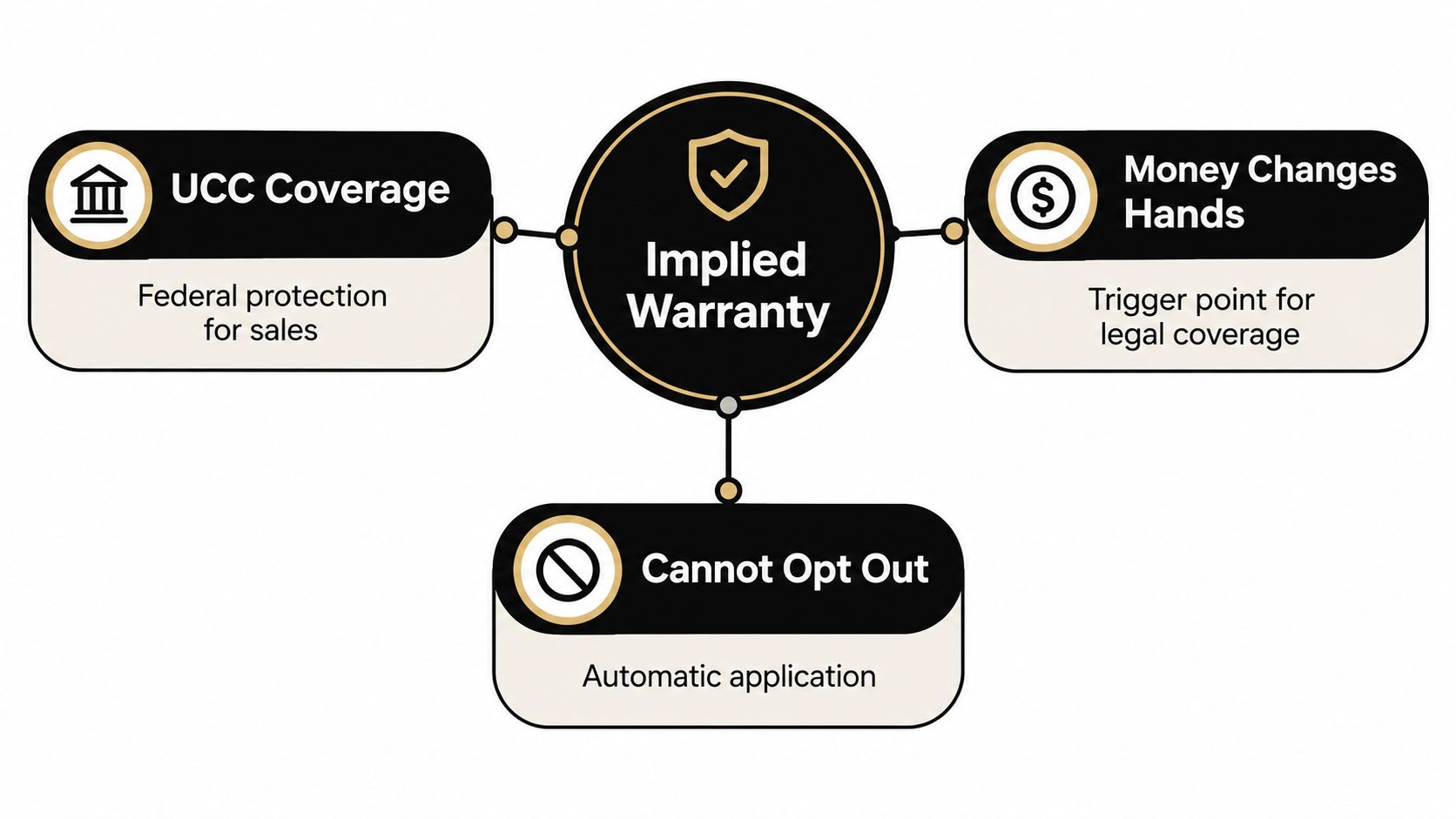
A statutory legal guarantee begins automatically when a consumer purchase falls under the applicable law. It comes from the transaction and the legal rules, not from a seller's goodwill. The buyer does not need to negotiate it into the order, and a narrower commercial warranty cannot normally remove it.
In the European Union, this protection applies when goods are defective or fail to match their description. The seller is generally responsible for putting the problem right through the remedies required by the relevant rules. The EU guidance on guarantees and consumer purchases explains this statutory foundation.
What the legal baseline covers
The relevant question is usually whether the defect was already present when the product was delivered, even if the fault became visible later. The EU consumer guarantee FAQ describes how buyers can establish that connection and seek a remedy.
Consider a restaurant ordering a battery-operated fly fan for an outdoor service area. If the fan fails because of a defect or does not perform as the listing described, the buyer may have a statutory claim against the seller. That claim matters when a faulty unit leaves a buffet exposed to insects during a busy event. A replacement that arrives after the service may solve the product problem while still leaving the business with avoidable disruption.
A product listing can also shape expectations. Words such as “guaranteed,” “suitable for outdoor use,” or “continuous operation” may appear to describe features, but they can become relevant evidence of what the seller promised. The exact wording, operating instructions, and exclusions determine how far that promise reaches.
A statutory guarantee is not automatically a promise that every buyer will like the product or that it will work in conditions outside its instructions. A voluntary satisfaction policy may offer broader protection, but its written terms control the process. This peace-of-mind guarantee guide shows how a commercial commitment can be presented alongside a purchase. Read it separately from the statutory rights attached to the transaction.
Key concept: A legal guarantee is a consumer protection created by law. A commercial guarantee adds a stated promise, while a warranty typically sets out additional coverage and conditions. The label matters less than the event that triggers the remedy and the time needed to restore service.
Understanding What a Warranty Adds on Top
A commercial warranty gives a seller or manufacturer written duties beyond the basic purchase terms. It works like an extended handshake, except the document defines what happens when something goes wrong. Depending on the wording, it may cover defects, arrange a repair, provide a replacement, or offer a refund in specified circumstances.
Read the warranty as an operating document, not just a promise on a product page. Check the model number, the event that starts the coverage period, the remedy offered first, and who pays shipping. Look for exclusions, proof-of-purchase requirements, registration rules, claim deadlines, and the steps for opening a case. A clear process can matter as much as the length of coverage.
For a fly fan used at an event, the warranty may cover a motor defect but exclude moisture, impact, incorrect handling, or operation outside the instructions. It might require an order number, photographs, or a registration record. It should also explain whether the seller ships a replacement before receiving the faulty unit, or waits for the original to be returned.
How to read the warranty document
Start with four questions:
- Which product is covered? Confirm the model, serial number, accessories, and any installation conditions.
- When does coverage start? The trigger may be delivery, purchase, installation, or registration.
- What remedy comes first? The wording may give the company a choice among repair, replacement, credit, or refund.
- Who handles the logistics? Check return instructions, shipping costs, collection arrangements, and expected response steps.
Then compare the warranty with the purchase paperwork and the product listing. A commercial warranty can define its own scope, but its exclusions cannot erase mandatory consumer rights. The written terms also reveal whether a confident phrase such as “continuous operation” is supported by a usable remedy or limited by conditions elsewhere in the document.
For a hotel, caterer, or event supplier, downtime deserves close attention. A replacement that arrives after service may satisfy the warranty while leaving the business without protection during the busiest hours. A shorter coverage period with advance replacement and clear shipping responsibility can therefore be more useful than a longer warranty that requires lengthy inspection.
A longer warranty is not automatically better. The practical value lies in a precise remedy, workable claim steps, and a response process that gets the equipment back into service.
How Different Countries Draw the Line
The same fly fan can carry different legal expectations depending on where a hotel buys it, who sells it, and which country's rules apply. That matters when an event supplier orders equipment from an overseas marketplace or a manufacturer lists one product across several markets.
European Union
EU rules give hospitality buyers a useful starting point, but the correct contact may be less obvious than the product listing suggests. For a hotel importing fly fans, confirm which seller entity is responsible for the legal remedy in the country of purchase. The claim generally starts with the seller, not automatically with the overseas manufacturer. The EU guarantee FAQ explains the framework, while the European Commission's consumer guarantee information provides further consumer guidance.
The paperwork should identify the seller's legal name, address, and claim route. Keep the invoice, delivery record, and product description together. Those documents help establish who supplied the fan and what was represented at the time of purchase.
Consumer awareness is uneven. A European Commission study found that 67% of surveyed EU consumers knew a minimum legal guarantee existed, but only 35% knew the correct period in their own country. Seller explanations were also inconsistent, with 40% disagreeing that sellers generally explained the legal-guarantee period. For a busy venue, unclear information can delay a claim when equipment fails before service.
Practical takeaway: Identify the responsible seller before ordering, especially when an overseas manufacturer and local marketplace appear on the same product page.
United States
The Magnuson-Moss Warranty, Federal Trade Commission Improvement Act, enacted in 1975 governs important aspects of written consumer warranties. It requires clearer disclosures, sets conditions for “full” warranties, limits some disclaimers of implied warranties, and provides remedies for certain breaches. The Federal Trade Commission's Magnuson-Moss materials also explain that a company generally cannot deny coverage solely because a consumer used unauthorized parts or services, although damage caused by those parts or services may remain excluded.
For an event business, read the label attached to the promise. “Full” and “limited” do not describe the entire claim experience. The exclusions, remedy, and service process determine what happens when a fly fan stops working during a booking.
Practical takeaway: Check the warranty classification, then compare its remedy with applicable state-law protections.
United Kingdom
Under the Consumer Rights Act 2015, a guarantee is an undertaking given without extra charge. The guarantor promises to reimburse the price, repair, replace, or otherwise address goods that fail to meet the guarantee or related advertising. The commitment becomes contractual when the goods are delivered.
Practical takeaway: A written UK guarantee is an enforceable promise, not merely friendly promotional wording.
Australia
In Australia, a warranty is a voluntary promise from a seller or business. Once accepted with the purchase, it becomes a legal right alongside automatic consumer guarantees. The Australian Competition and Consumer Commission's warranty guidance explains that those consumer guarantees may continue after a written warranty expires.
Practical takeaway: Treat the printed warranty period as one layer of protection, not necessarily the end of every available remedy.
When Product Claims Become Legal Promises
A product page can create obligations without using the word warranty. Under U.S. Uniform Commercial Code principles, a seller's factual affirmation, product description, sample, or model can become part of the basis of the bargain. The seller doesn't need to write “we warrant” or “we guarantee,” as explained in UCC Section 2-313 on express warranties.
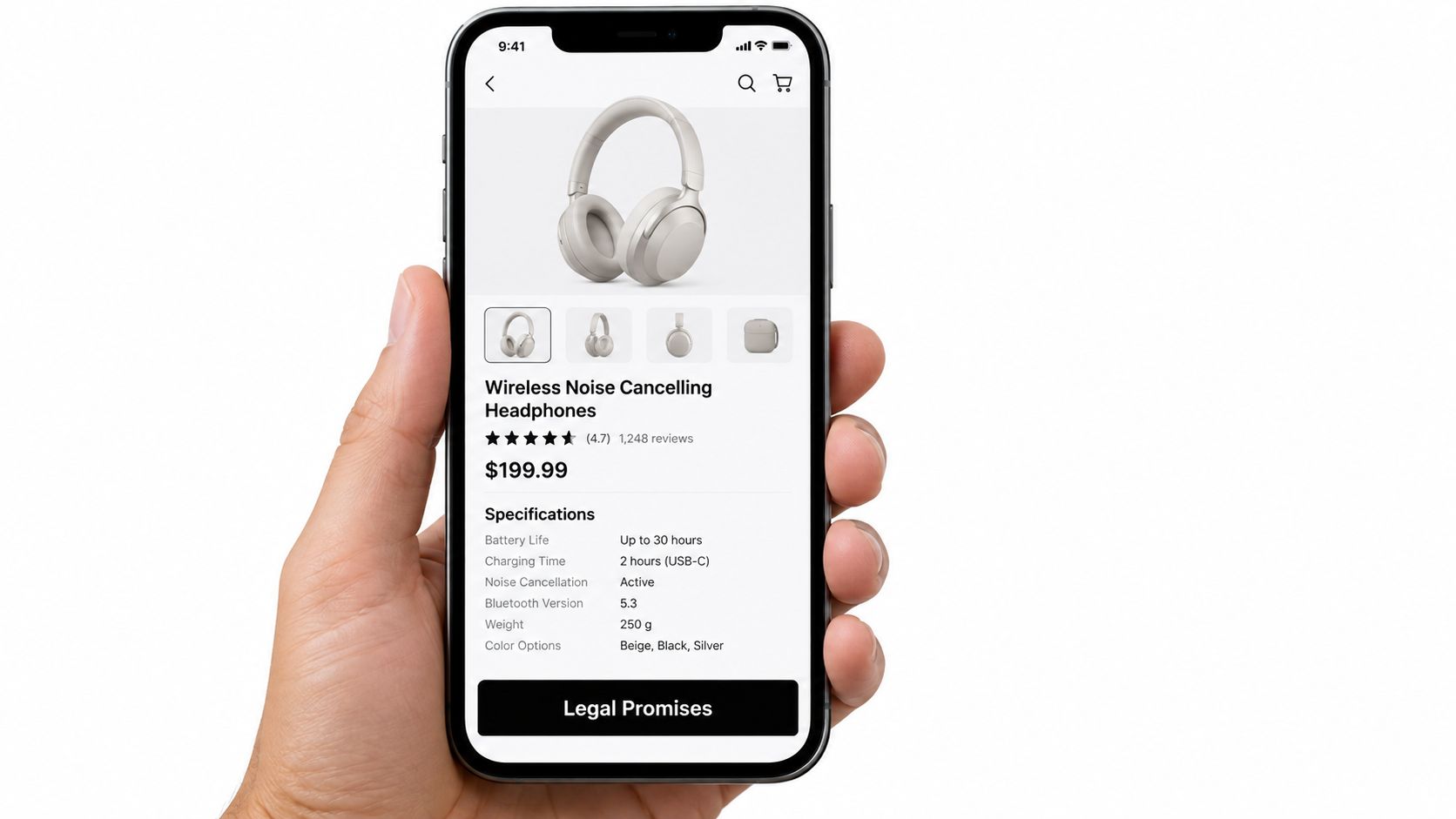
Consider a fly fan listing that states “quiet operation for outdoor buffets.” A buyer may reasonably read that as a performance representation, not mere enthusiasm. If the fan produces disruptive noise during ordinary use in the stated setting, the buyer may argue that the product failed to match a factual description.
“Durable” raises a similar issue. The word can remain general praise in one context, but a listing that connects durability to specified materials, operating conditions, or use at events sounds more like a factual representation. “The best fly fan around” is vague sales language and gives the buyer less measurable substance.
What sellers should define
A careful listing gives the claim a fair boundary. It can state the operating conditions, expected battery-life assumptions, noise characteristics, coverage area, and appropriate indoor or outdoor use. It should also identify exclusions for moisture exposure, misuse, unauthorized modification, or operation outside the instructions.
Buyers should save the listing, order confirmation, specifications, and photographs. If a claim later turns on whether the product was “quiet,” “durable,” or suitable for a particular buffet arrangement, the original wording may matter.
For businesses reviewing contract language around factual promises, it can help to review representations and warranties clauses before finalizing a supplier agreement.
A typical dispute might begin after a wedding planner places a fly fan beside a seated dining area. The product works, but its noise is noticeably intrusive, despite the listing's “quiet operation” statement. The buyer's argument is not just that the fan feels disappointing. It's that the seller described a performance characteristic that formed part of the purchase decision.
The following video offers another way to think about how product promises and warranty language appear in commercial transactions.
Communicating Terms Clearly as a Seller
A seller earns trust by making the promise easy to find and difficult to misunderstand. Restaurants, caterers, equipment brands, and distributors should write warranty terms for the person handling a failed unit during service, not for a lawyer searching through dense clauses.
Do
- Name the covered product: Identify the model, included components, and whether accessories or consumable parts receive separate treatment.
- State the duration: Explain when coverage begins and whether it follows delivery, purchase, registration, or another event.
- Describe the remedy: Say whether the business will repair, replace, refund, or choose among those options.
- List exclusions plainly: Address batteries, moisture damage, misuse, accidental damage, unauthorized modifications, and use outside stated conditions.
- Explain the claim process: Tell customers where to submit a claim, what proof of purchase is needed, and whether photographs or troubleshooting steps are required.
- Assign shipping responsibility: State who pays to return a defective unit and who pays to send a repaired or replacement product.
- Protect statutory rights: Make clear that the commercial promise doesn't affect mandatory consumer rights.
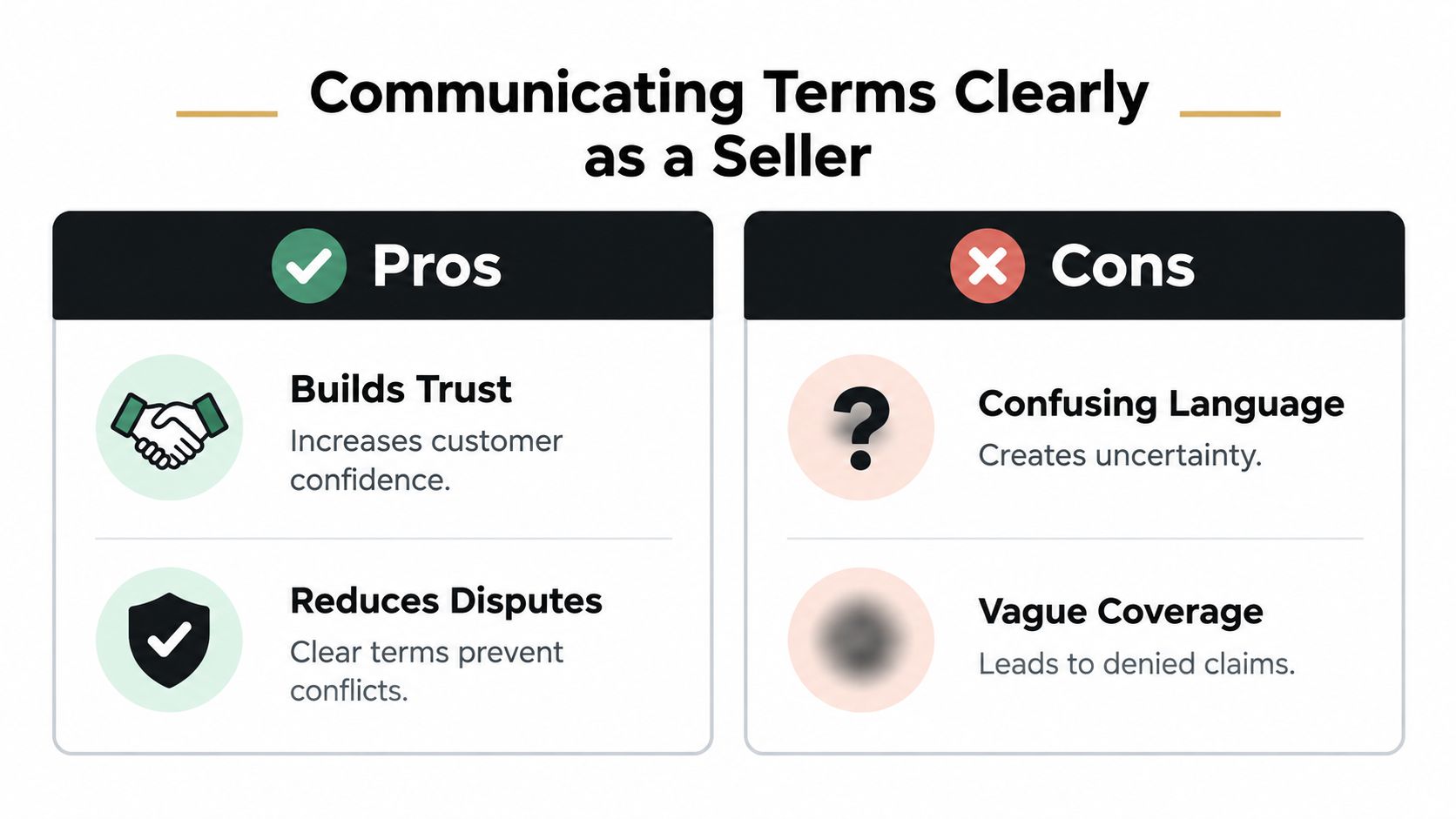
Don't
- Don't use “guaranteed” without a remedy: Customers need to know what happens when the promise fails.
- Don't hide key limits: A battery or moisture exclusion buried in a separate document can create avoidable disputes.
- Don't make customers search for the policy: Put the essential terms on the product page, packaging, and order confirmation.
- Don't demand steps that conflict with applicable law: Registration can simplify support, but it shouldn't be presented as a condition that removes statutory rights where those rights cannot be waived.
The UK Consumer Rights Act 2015 requires a guarantee to use plain and intelligible language, identify the guarantor, specify duration and territorial scope, and state that statutory rights remain unaffected. The requirements appear in Section 30 of the Consumer Rights Act 2015. Even outside the UK, that approach is sound business practice.
A structured FAQ can expose missing answers before customers encounter them. Sellers can browse the AgentStack FAQ template for a way to organize questions about eligibility, evidence, exclusions, shipping, and response steps. A clear registration flow, such as a warranty registration card, can also give both sides a reliable record of the order.
Handling Claims and Judging Coverage by Downtime
A claim becomes easier to manage when you separate evidence from assumptions. Start with the purchase record, then document the defect, follow the stated procedure, and identify whether the refusal concerns the commercial warranty, statutory rights, or both.
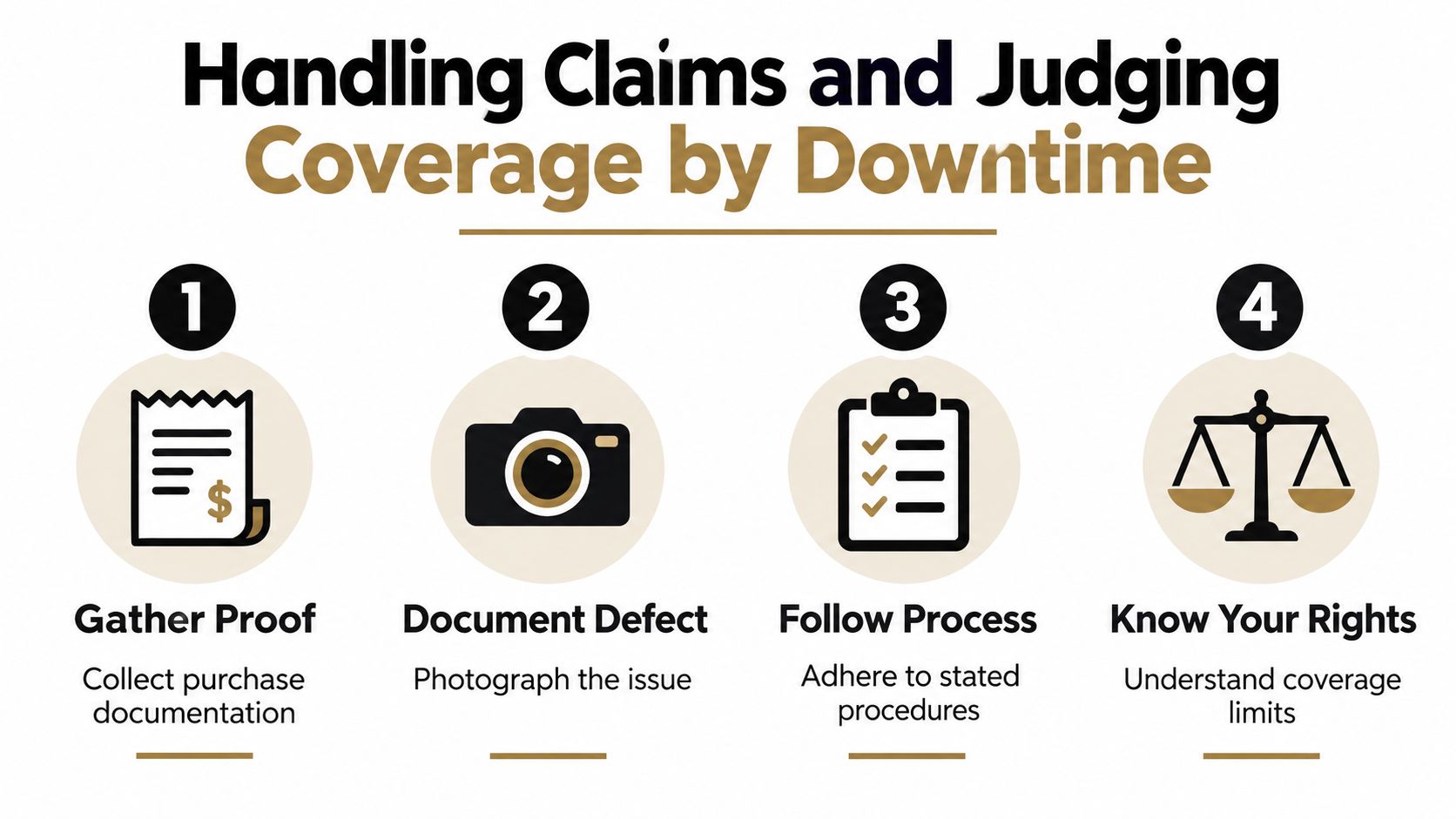
A practical claim sequence
- Gather proof: Keep the receipt, order confirmation, model information, and registration details.
- Document the defect: Photograph the unit, record relevant symptoms, and note when and how the failure occurred.
- Follow the process: Use the stated support channel, complete required troubleshooting, and retain correspondence.
- Know your rights: If a commercial warranty claim is denied, check whether statutory protections provide a separate route.
The most important purchasing question for event and dining equipment may not be “How long is the warranty?” It may be “How quickly can this product return to service?” A longer replacement-only promise can leave a caterer waiting, while a shorter policy with available parts, clear exclusions, and a defined repair turnaround may reduce operational disruption.
Compare the service system
Check whether the seller publishes response expectations, stocks spare parts, explains replacement versus repair, and accepts claims from a subsequent owner. Confirm who pays shipping and whether the policy distinguishes battery, motor, moisture, consumable-part, and misuse issues.
EU consumer-protection materials for 2025 describe a right to request repair for technically repairable products and a 12-month extension of the legal guarantee for a repaired product. The Council of the European Union's consumer-protection overview reflects a broader focus on repair access and downtime, not just the length of the original coverage period.
For businesses that need help after purchase, a defined warranty support service can make the difference between a documented claim and a stalled exchange. Before ordering, use this decision framework:
- Read the words: Save the listing and warranty document.
- Know the baseline: Identify the statutory rights in the place of purchase.
- Test the remedy: Ask how repair, replacement, refund, shipping, and exclusions work.
- Value uptime: Judge the promise by the service response and repair path, not the headline duration alone.
For battery-operated fly fans built for dining areas, buffets, receptions, and outdoor gatherings, MODERN LYFE provides product support, warranty registration, and assistance that helps customers understand their coverage. Visit MODERN LYFE to review its fly-fan products and choose equipment with the terms and service details that fit your operation.